


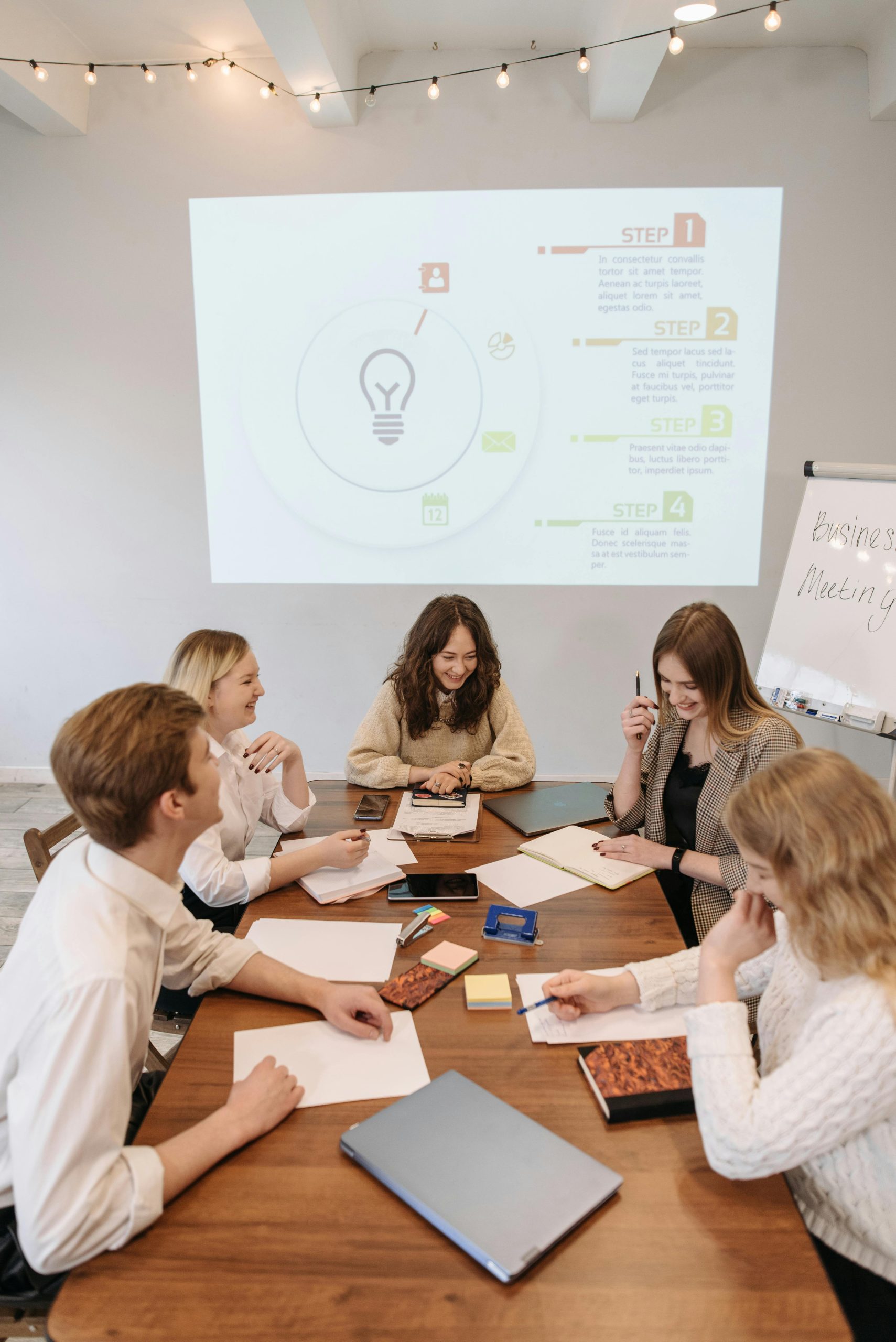
There is a disease spreading through organisations everywhere, and most leaders do not even know they are carriers. The symptoms are familiar: a calendar clogged with back‑to‑back appointments, a persistent fog of fatigue after hours of sitting, a sinking feeling that nothing actually got decided. The disease is the bad meeting, and it is not merely annoying. It is expensive, demoralising, and utterly preventable.
I have sat in meetings where the first ten minutes were spent waiting for latecomers, the next twenty rehashing what everyone already knew, the following thirty watching one person dominate the conversation, and the final five scrambling to assign action items that no one wrote down. I have left meetings unable to remember what was decided, and I have watched talented colleagues check their watches, check their phones, and check out entirely. The worst meetings do not just waste time. They waste talent, because every minute spent in a bad meeting is a minute not spent doing the work that actually matters.
Studies consistently show that professionals spend nearly a full day each week in meetings, and more than half of that time is estimated to be wasted. That is not a small leak. It is a hole in the bottom of the ship.
In my master’s thesis at HSE University, I argued that managerial soft skills are structural components of effective leadership. Running an effective meeting is not a minor administrative task. It is a leadership discipline that signals respect, clarifies direction, and multiplies the impact of every person in the room. The leader who cannot run a meeting cannot lead, because meetings are where strategy becomes action, where alignment is forged, where culture is enacted.
Module 7 is about curing the disease. Not with complicated frameworks or expensive software, but with a handful of simple disciplines that any leader can implement starting tomorrow.
The Story of the Monday Morning Meeting
Let me tell you about a team that transformed itself by changing one thing about its weekly gathering.
The team was responsible for customer support at a mid‑sized logistics company. Their Monday morning meeting had become a ritual of misery. It lasted two hours, sometimes three. The manager opened with a rambling update about company news. Then each of the twelve team members took turns reporting what they had done last week, which meant that everyone listened to eleven updates they did not need. Then they discussed problems that should have been solved in smaller groups. Then they ended with no clear decisions and a vague promise to continue the conversation next week.
The manager, a thoughtful woman named Adzo, knew something was wrong but could not figure out what. She thought the problem was the agenda, so she tried different agendas. She thought the problem was the length, so she tried shorter meetings that ran long anyway. She thought the problem was her team, so she tried different facilitation techniques. Nothing worked.
Then she read something that changed her perspective. She learned that the most effective meetings have three things in common: a clear purpose stated in advance, a time limit that is enforced, and a decision at the end. She realised that her meetings had none of those things.
She called her team together and proposed an experiment. The next Monday, they would meet for thirty minutes, no more. The agenda would be sent the Friday before, and it would consist of exactly three items: one decision to make, one problem to solve, and one update that could not be sent by email. Everyone would come prepared. Anyone who was late would bring snacks for the next meeting. And the meeting would end exactly on time, even if they were in the middle of a sentence.
The first two weeks were rocky. Some people forgot to prepare. Others resented the strict time limits. One senior team member complained that he could not possibly summarise his update in two minutes. Adzo held the line. She did not shout. She did not apologise. She simply said, “Let us hear your top three points, and we can follow up by email if needed.” By the third week, something shifted. People started arriving early. They came prepared. They spoke more concisely because they knew the clock was running. Decisions that used to take three meetings were made in fifteen minutes. The update that could not be sent by email turned out to be almost nothing, so they stopped having updates altogether.
Within two months, the team had reclaimed nearly six hours a week of productive time. Morale improved. Turnover dropped. And Adzo learned a lesson that transformed her leadership: a meeting is not a container for whatever happens to fill it. A meeting is a tool, and like any tool, it works only when used for its intended purpose.
The Psychology of Meeting Dysfunction
Why are so many meetings terrible? The answer lies in several well‑documented cognitive and social biases.
The first is planning fallacy. When we estimate how long a task will take, we imagine the best‑case scenario and ignore the lessons of history. We schedule a one‑hour meeting for a topic that has never been resolved in less than two hours, and then we are surprised when it runs over. The antidote is to look at past performance. How long did the last three meetings on this topic actually take? Use that number, not your hope.
The second is social loafing. In groups, individuals exert less effort than they would alone because they assume someone else will carry the load. In a meeting, this shows up as passive attendance, people who are physically present but mentally elsewhere. The antidote is to give every person a specific role or a specific question to answer. No spectators.
The third is the Abilene paradox, where a group agrees on a course of action that no individual actually wants, because each person assumes everyone else wants it. This happens constantly in meetings. Someone suggests a bad idea. No one objects because they do not want to be rude. The group proceeds down a dead end. The antidote is to create explicit permission for disagreement. “Before we move on, I want to hear from anyone who sees a problem with this.”
The fourth is status effects. In most meetings, the highest‑status person speaks first and most, and their opinion anchors the conversation. Lower‑status people, even when they have valuable information, often remain silent. The antidote is to reverse the order of speaking. Ask the most junior person for their opinion first, then work your way up. You will hear things you would otherwise miss.
The fifth is the meeting recovery effect. Research from the University of California, Irvine, found that after any interruption, including a meeting, it takes an average of twenty‑three minutes to return to full focus on a complex task. Every time you switch from a meeting to deep work, your brain needs time to reorient. If you have three meetings in a day, you can lose more than an hour of focused work to transition time alone. The antidote is not fewer meetings, though that helps. It is better meetings that end on time and leave people with clear next steps, so they can transition more quickly.
The Business Case for Meeting Discipline
The financial cost of bad meetings is staggering, but most organisations never calculate it because the cost is invisible.
A study by Atlassian found that the average employee attends sixty‑two meetings per month, and that half of those meetings are considered a waste of time. For an employee earning a median salary, that waste amounts to thousands of dollars per year. For a team of ten, tens of thousands. For a company of a hundred, hundreds of thousands. That is money that could be spent on salaries, bonuses, or investment, and it is being incinerated in conference rooms.
A Harvard Business Review study of senior managers found that 71 percent said meetings are unproductive and inefficient. The same study estimated that poor meetings cost large organisations millions of dollars annually in lost productivity and employee disengagement.
The indirect costs are even larger. Bad meetings create decision fatigue, which leads to worse decisions later in the day. They interrupt deep work, which is the source of most creative and analytical value. They frustrate employees, which increases turnover. And they model dysfunction, teaching everyone that this is how things are done here.
The organisations that take meeting discipline seriously gain a competitive advantage that is almost impossible to copy. Amazon is famous for its six‑page narrative memos, which are read in silence at the start of every meeting, replacing the rambling PowerPoint that wastes everyone’s time. Google is famous for its “meeting culture” training, which teaches employees to cancel any meeting without a clear agenda. These companies have not solved all their problems, but they have stopped bleeding time.
In the Ghanaian context, where many organisations are small and resources are tight, the cost of a bad meeting is even more acute. A two‑hour meeting for a team of six is twelve person‑hours. If that meeting accomplishes nothing, you have just spent a day and a half of labour on nothing. You cannot afford that, and neither can your team.
The Philosophy of Gathering
The philosophers have long understood that how we gather reveals who we are.
Aristotle distinguished between praxis (action undertaken for its own sake) and poiesis (action undertaken to produce something). Most meetings are supposed to be poiesis, they are meant to produce decisions, plans, or alignment. But they often become praxis, activity that continues for its own sake, with no product at the end. The leader who does not know the difference will hold meetings that feel productive but produce nothing.
The Stoics practiced the discipline of asking, “Is this necessary?” before any action. Seneca wrote that we should avoid the crowd not because we are anti‑social, but because most of what happens in crowds is noise. The same applies to meetings. Before you schedule or attend a meeting, ask: “Is this necessary? Could this be an email? Could this be a five‑minute conversation? Could this be handled by two people instead of twelve?” The meeting that survives these questions is worth having.
Henri Lefebvre, the French philosopher of everyday life, wrote about rhythmanalysis, the study of how rhythms shape human experience. He argued that the rhythm of our days, the alternation between gathering and solitude, between action and reflection, shapes what we can produce. A day chopped into thirty‑minute meeting fragments produces shallow work, because the mind never settles. A day with one focused meeting and long stretches of uninterrupted time produces depth, because the mind can sink into the work. The leader who understands rhythm does not just schedule meetings. They choreograph the day.
African Wisdom on the Council
The African tradition has developed sophisticated forms of gathering that modern meetings would do well to study.
The palaver, which we have discussed in other modules, is not a free‑for‑all. It has a structure. The circle ensures that no one sits at the head. The talking stick ensures that only one person speaks at a time. The elder facilitates not by controlling but by creating conditions for consensus. The palaver takes time, sometimes days, because the goal is not speed but depth. The modern meeting that rushes to a decision often makes the wrong one. The palaver that takes its time arrives at a decision that the community will actually follow.
In traditional Ghanaian chieftaincy, the durbur is a formal gathering of the chief, elders, and people. It has strict protocols. The chief speaks only through the okyirɛme (linguist). The order of speaking is prescribed. No one interrupts. The gathering has a clear purpose, whether to announce a festival, settle a dispute, or receive guests. The durbur is not efficient by modern standards, but it is effective. Everyone leaves knowing what was decided and what is expected.
The Akan proverb “Ɔbaakofo ntumi nye kurow” appears again here, because it applies to meetings as well as to communities. One person does not build a town, and one person does not make a good meeting. The meeting belongs to everyone in it. The leader’s job is not to perform. It is to create the conditions where everyone can contribute.
Another proverb: “Sɛ wokɔ akyiri a, kyerɛ wɔn a wɔbɛba” means, “If you are going far, tell those who will come.” The agenda sent in advance is the modern version of this wisdom. Do not surprise people. Do not expect them to be ready without warning. Tell them what you will discuss, and they will come prepared.
Sacred Tradition on Orderly Assembly
The sacred texts are not naive about the challenges of gathering. They offer guidance that is surprisingly practical.
The Council of Jerusalem in Acts 15 is a biblical model of effective meeting. The apostles and elders gathered to resolve a contentious dispute about whether Gentile converts needed to follow Jewish law. They did not rush. They heard testimony from Peter, Paul, and Barnabas. They listened to the community. James, the leader, summarised the discussion and proposed a decision. The group reached consensus. They wrote a letter to communicate the decision clearly. The meeting produced a result that held for generations.
The Qur’an advises consultation in Surah 42: “Those who have responded to their Lord and established prayer and whose affair is determined by consultation among themselves.” This verse was revealed in Medina, where the early Muslim community had to make collective decisions about governance, warfare, and resource allocation. Consultation was not optional. It was commanded. But consultation without structure is chaos. The leader who consults without a process is not leading. They are abdicating.
The book of Proverbs warns against the meeting that never ends: “Without counsel, plans fail, but with many advisers they succeed.” The key word is “advisers.” Not listeners. Not attendees. Advisers. People who are expected to contribute. The meeting where only the leader speaks is not a meeting of advisers. It is a lecture.
The story of Jethro advising Moses in Exodus 18 is a lesson in meeting design. Moses was judging every dispute alone, and the people stood around all day waiting. Jethro told him to delegate, to create a hierarchy of judges, to bring only the hardest cases to Moses himself. The meeting of the whole community was replaced by a system. Sometimes the best meeting is no meeting.
The Practical Framework for Effective Meetings
Let me give you a system. It has six parts, and every part is essential.
Part one: The purpose statement. Before you schedule any meeting, write down in one sentence what will be different when the meeting ends. “We will have decided which vendor to use.” “We will have identified the three main causes of the delay.” “We will have assigned owners to each action item.” If you cannot write that sentence, cancel the meeting.
Part two: The agenda. The agenda is not a list of topics. It is a list of outcomes, each with a time limit. “Decide on vendor (15 minutes).” “Identify causes of delay (20 minutes).” “Assign action items (10 minutes).” Send the agenda at least twenty‑four hours in advance. Ask everyone to come prepared with their input.
Part three: The roles. Every meeting needs three roles. The facilitator keeps time, guides the discussion, and ensures everyone speaks. The scribe takes notes and records decisions. The timekeeper watches the clock and alerts the group when time is running out. These roles can rotate. They must be assigned.
Part four: The speaking order. To break status effects, ask the most junior person to speak first, then work your way up. To keep the meeting focused, allow only the person holding the talking object, a pen, a coffee cup, anything, to speak. No interruptions.
Part five: The decision rule. Be explicit about how decisions will be made. By consensus? By majority vote? By the leader after hearing input? If no one knows the rule, the meeting will drift.
Part six: The closure. End every meeting with a five‑minute recap. What did we decide? Who will do what by when? Who needs to know? Send these notes within an hour. A decision that is not written down is not a decision. It is a memory that will fade.
The Meeting Checklist
Before the meeting:
· Purpose statement written in one sentence.
· Agenda sent 24 hours in advance with time limits.
· Roles assigned (facilitator, scribe, timekeeper).
· Decision rule agreed.
During the meeting:
· Start on time. Do not wait for latecomers.
· Read purpose statement aloud.
· Junior person speaks first.
· One person speaks at a time (talking object).
· Enforce time limits.
After the meeting:
· Recap decisions and action items.
· Send notes within one hour.
· Schedule follow‑up if needed.
Exercises for This Week
Exercise one: Fix one meeting.
Choose a recurring meeting that you attend, ideally one you lead. For the next occurrence, do three things.
First, send the agenda forty‑eight hours in advance. Include the purpose statement and the time limits. Ask each attendee to come with one question or one piece of input.
Second, at the start of the meeting, read the purpose statement aloud. Say, “By the end of this hour, we will have [the purpose]. Does anyone need clarification?”
Third, enforce the time limits. When the fifteen minutes for a topic are up, say, “We are out of time for this topic. We have two options: extend the meeting, which I do not recommend, or table this for next time. What do we choose?” Most groups will choose to table it, and they will learn to move faster next time.
After the meeting, debrief with yourself. What worked? What was hard? What will you do differently next week?
Exercise two: Audit your calendar.
Open your calendar for the next week. Count every meeting. For each one, ask three questions:
· Could this be an email? If yes, cancel it and send the email.
· Could this be a five‑minute stand‑up? If yes, shorten it.
· Could this be delegated to two people instead of the whole group? If yes, shrink the invite list.
Cancel the meetings that fail the test. Shorten the ones that survive. Then track how much time you recover. Use that time for deep work, for your team, or to leave the office on time. You will be amazed at how much space appears.
A Final Word
The meeting is the atomic unit of organisational life. It is where culture is enacted, where decisions are made, where relationships are built or broken. A leader who cannot run an effective meeting cannot lead effectively, because the meeting is the medium through which leadership flows.
Bad meetings are not inevitable. They are choices, made by default, repeated by habit. You can choose differently. You can send the agenda. You can enforce the time limit. You can ask the junior person to speak first. You can end with clear decisions and action items. These are not difficult. They are just intentional.
Your team is watching. They know when a meeting is wasting their time. They know when you are unprepared. They know when you value their input and when you are going through the motions. Every meeting is a signal. Send the right one.
The Monday morning meeting that used to take three hours now takes thirty. The decisions that used to take weeks now take days. The team that used to dread gathering now looks forward to it, because they know that their time will be respected, their voices will be heard, and their work will move forward.
That is not magic. That is discipline. And discipline, practiced consistently, becomes structure. Structure becomes culture. Culture becomes the water you swim in. That is how effective leaders build organisations that respect time, talent, and purpose.
This module is part of the P.O.S.H. Leadership Curriculum, available for free at [www.poshlifeplan.com]. The curriculum was developed through research conducted for a master’s thesis at HSE University and is offered freely to support leadership development in Ghana and beyond.
Module 7 falls under the P.O.S.H. Leadership Foundations pillar of the P.O.S.H. Framework. For the full curriculum, including pre‑ and post‑module assessments, visit the website.



Leave a Reply
You must be logged in to post a comment.